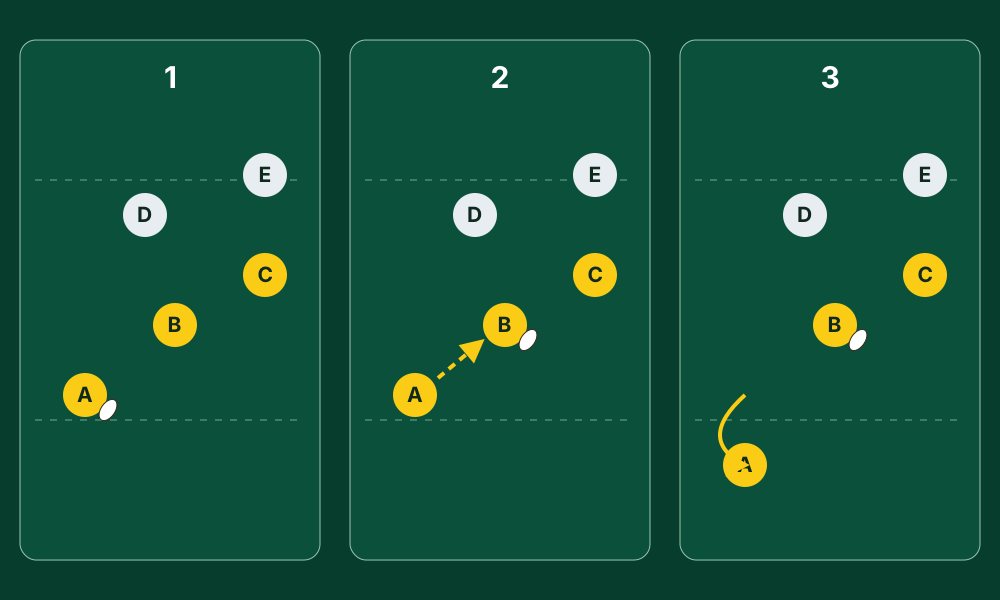
1. Decide what the team should understand
The objective here is to explain how a player becomes available again after passing. The example does not attempt to solve an entire attacking situation or prescribe a response to every defence.
Limit the drawing to three attackers, two defenders and the ball. Label the attackers A, B and C and the defenders D and E. These labels help follow the explanation; they do not represent regulated playing positions.
2. Show the starting shape before adding movement
Place the players and identify who has the ball. Ask the group what space they can see and what information they would need to make a decision. If the starting shape is unclear, more arrows will make the explanation harder.
In Tactic Board, place the players and build the sequence in phases. Use the 3D view to check that your explanation of space is consistent with the starting situation.
3. Separate the pass from the support run
In the second phase, show A passing to B. In the next, show A moving to offer support while B has the ball. Keep C and the defenders visible so the group can discuss other options.
In the diagram, the dashed line represents a pass and the solid line represents a run. This is a convention for this illustration; explain your markings before using them with a team.
4. Review, save and discuss again
Play through the phases and ask the players to describe the next movement in their own words. Adjust the sequence if the diagram does not communicate your intended idea.
Save the play in a collection with a recognisable name and objective. Adapt this illustrative example to the group and training situation; it does not replace the coach’s judgement. This guide does not automatically create a play in your account.